
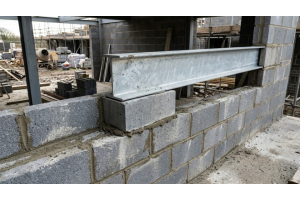
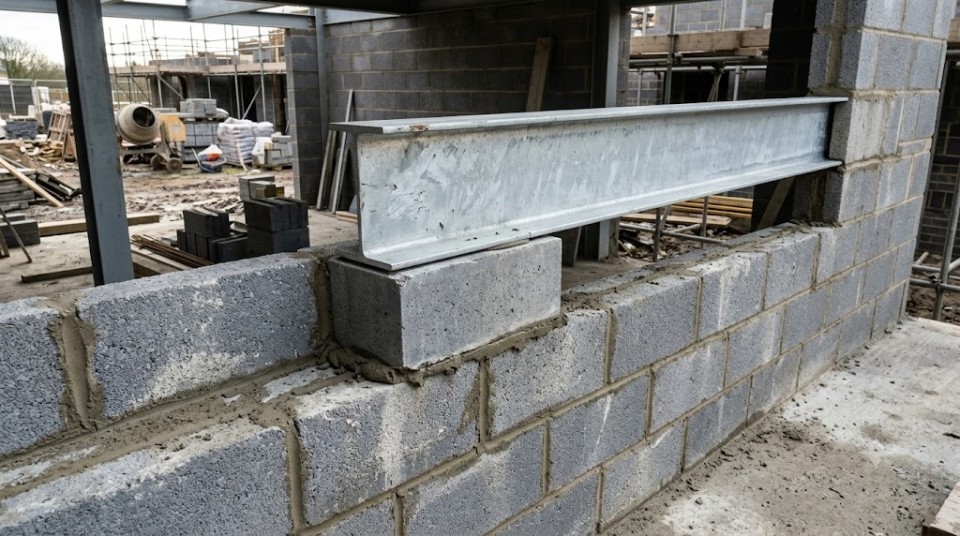
When a steel beam sits on a wall, it concentrates a significant load into a very small area, and without something underneath it to spread that load, the masonry below can crack, crush or fail entirely. A padstone is the dense block placed at each end of a steel beam to distribute the weight safely into the wall, and getting the size and specification right is just as important as specifying the beam itself.
What is a Padstone?
A padstone is a load-bearing block bedded into the masonry at the point where a structural beam comes to rest, and it takes the concentrated point load coming down through the beam and spreads it over a wide enough area that the brickwork or blockwork below is able to carry it without being overstressed.
It’s important not to undersize padstones, as it can cause issues like diagonal cracking in the masonry below the bearing and, in more serious cases, settlement in the wall itself.
What are Padstones Used For?
Padstones are used wherever a beam bears onto a masonry wall, which covers more situations on a typical build than you might expect. Steel beams over knocked-through openings, loft conversion steels, ridge beams and column base plates all require padstones, and if a structural engineer has specified a steel beam for your project, there will almost certainly be a padstone requirement to go with it.
Application | Typical Use |
Steel RSJ over opening | Most common domestic application |
Flitch or engineered timber beam | Padstone is still required at bearing points |
Roof ridge steel | Increasingly common in open-plan conversions |
Column base plate | Load is vertical and concentrated |
What are the Different Types of Padstone?
There are three main materials for padstones, which aren’t always interchangeable.
Dense Concrete
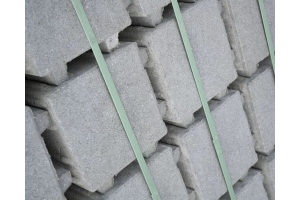
This is comfortably the most common choice on modern sites. Manufactured to a defined compressive strength, available in standard sizes, and straightforward to specify and order.
Engineering Brick
Sometimes used where a concrete block would be visually prominent or where heritage work demands it, engineering bricks often come into their own. However, you need enough courses to achieve the required bearing area and the mortar joints introduce variables that a single solid block avoids.
Natural Stone
Frequent in restoration projects, but any engineer specifying it will want confirmation of the compressive strength of the natural stone before signing off.
The Padstone Sizes
Sizing is determined by three things: the load being transferred, the bearing length needed to keep stresses within acceptable limits, and the thickness of the wall the padstone is sitting onto.
Common UK stock sizes of padstones include:
- 100 x 215 x 215mm
- 100 x 215 x 440mm
- 215 x 215 x 440mm
All of three standard dimensions are designed to work with standard masonry coursing. For anything beyond a straightforward domestic opening, a structural engineer should confirm the exact dimensions rather than the builder picking the nearest available size.
You can cut a dense concrete padstone on-site with a diamond blade disc cutter, and trimming does sometimes happen to fit a tight pocket. However, cutting reduces bearing area, so if the padstone has been specified to a particular size, any trimming should be checked against the structural calculation first. It is always better to order the right size than to rely on site cuts.
C30 Padstones
C30 refers to the compressive strength class of the concrete, meaning the mix achieves a characteristic strength of 30 Newtons per square millimetre. This is the minimum strength typically specified for structural padstones and is referenced in design to BS EN 845-1, which covers ancillary masonry components including padstones and lintels. When an engineer specifies a C30 padstone, they are setting a material floor, not just a size, and building control will expect to see products that meet it. Using a padstone from a reputable supplier with documentation to back up the specification is a straightforward way to avoid queries at inspection.
Buy Padstones From Emerys
Here at Emerys, we stock padstones in addition to our range of lintels. Have a look and order from a reliable West Midlands merchant. Looking for advice? Contact us today.
FAQs
What size padstone do I need for a steel beam?
This depends on the load, span and wall construction, and should always be confirmed by your structural engineer. A 100 x 215 x 440mm C30 padstone is a common starting point for domestic openings, but the engineer's drawings are the definitive reference.
What is the difference between a padstone and a lintel?
A lintel spans an opening and carries the wall above it. A padstone sits beneath a beam and distributes the load the beam deposits into the wall below. In many installations, both are present, working together but doing different jobs.