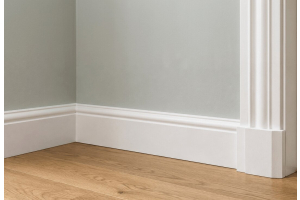
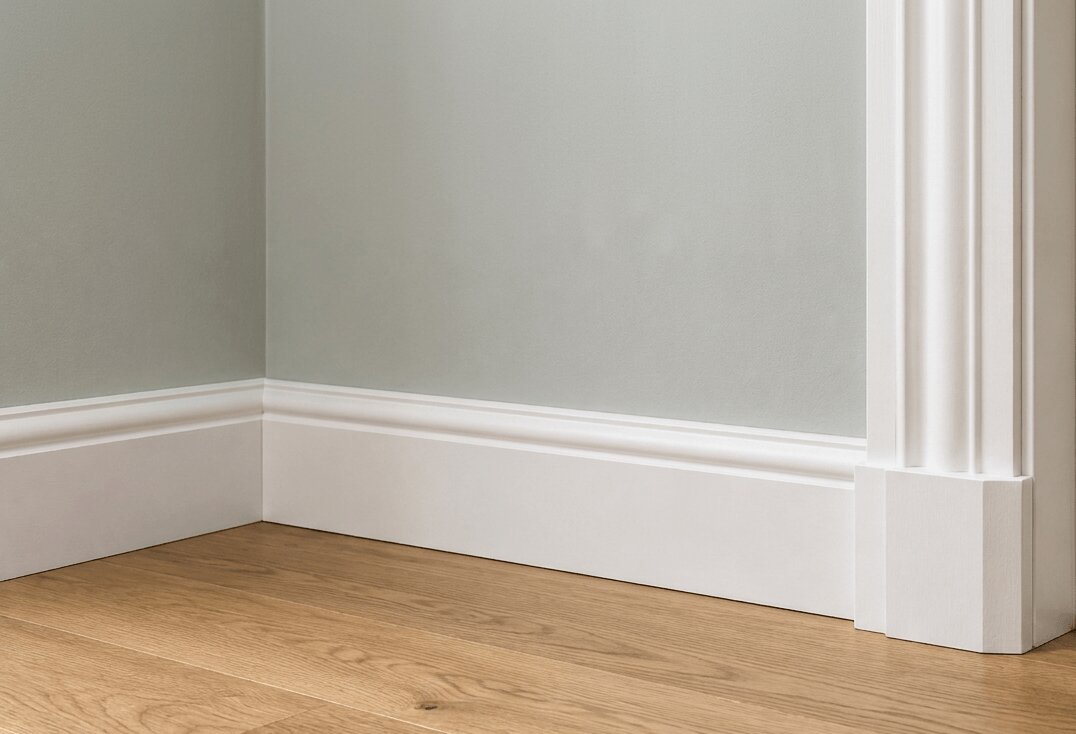
Often overlooked, skirting boards and architrave play a key role in interior design, not only putting the finishing touches on a neat living space, but also protecting the walls from scuffs and knocks.
When utilised correctly, they perfectly frame doors and windows, and are one of the unsung heroes of interior construction.
However, there are actually numerous profiles, more than many expect. We have laid out below the different types of skirting & architrave and given comparisons to help you choose a profile.
What Are the Different Architrave and Skirting Profiles?
The term "profile" simply refers to the shape you see when you look at the cross-section of the timber. Some are curved, some are stepped, some are completely flat. Each one has a different visual weight and suits different architectural styles. Here are the main profiles you'll come across.
Torus
Torus is probably the most widely used skirting and architrave profile in the UK, and features a large and rounded bullnose curve along the top edge. This creates a clean and traditional look without being too ornate, ideal for period properties and new builds alike. Its ability to fit into different styled homes is part of what makes it so popular.
Ogee
Ogee profiles are defined by their distinctive S-shaped curve, which combines a concave section with a convex one. The result is something with a bit more visual detail than torus, lending itself well to Victorian, Georgian, and Edwardian interiors. If you're restoring a period property or want to add some character to a room, ogee is a strong choice. It's also available in varying depths, and deeper ogee skirting can become quite a feature in its own right.
Other Options
Some other options are also solid, with chamfered and pencil round being a modern favourite with a flat face, bevelled top edge, and a lightly rounded front corner. It's straightforward, understated, and suits contemporary interiors well.
Ovolo sits between torus and ogee in terms of decorative detail, featuring a quarter-round curve that's slightly more refined than torus but less elaborate than ogee.
Square edge (pencil round) goes even more minimal with a completely flat face and very slightly softened corners, which works well in stripped-back or Scandi-style interiors. Lambs tongue is a traditional profile with a gentle curved groove along the top and is often found in older properties.
Profile Comparison
Profile | Style | Visual Detail | Best Suited To | Pros | Cons | Price |
Torus | Traditional/Diverse | Medium | Most property homes | Widely available | Often plain in high-end homes | Medium |
Ogee | Classic | High | Victorian and Georgian | Strong character | Less suited to modern interiors | Medium / High |
Chamfered & Pencil Round | Contemporary | Low | Modern and new build homes | Clean, minimal, and cost effective | Too plain for period properties | Low |
Ovolo | Traditional | Medium | A mix of traditional and modern | Versatile | Less widely stocked | Medium |
Square Edge | Minimal | Very Low | Scandi, Industrial | Extremely clean lines | No period appeal | Low |
Lambs | Period | Medium / High | Older or restored properties | Authentic period feel | Harder to find in all sizes | High |
Which Skirting and Architrave Profile Should I Use?
There's no single right answer here. The best profile for your project depends on a few different factors.
- The age and style of your property matter most. A Victorian terrace will look more coherent with ogee or lambs tongue than chamfered boards. A modern new build or apartment generally suits chamfered, pencil round, or square edge profiles.
- The height of your ceilings is also worth considering. Taller rooms with higher ceilings can carry deeper, more decorative skirting boards. In a room with low ceilings, a very chunky ogee board can feel heavy and out of proportion.
- Your existing joinery plays a role too. If your doors and staircase already have a traditional feel, it makes sense to echo that in your skirting and architrave rather than mix styles.
- Budget is a practical consideration. Simpler profiles like chamfered tend to be less expensive than more detailed ones, and if you're covering large areas, that can add up.
When in doubt, go and look at the profile in person before you commit. Seeing it at scale is very different to viewing a thumbnail online.
Buy Skirting and Architrave in the West Midlands at Emerys
At Emerys, we stock a wide range of skirting and architrave profiles to suit homes and projects of all kinds. Whether you're renovating a Victorian property and need authentic ogee boards, or you're fitting out a new build and want clean chamfered profiles, we can help you find the right timber in the right size.